Architecture designed for today's lifestyle
One of the fundamental principles of contemporary architecture is its direct connection to the user’s lifestyle. Homes are no longer conceived as a collection of isolated rooms, but rather as a set of interconnected spaces that promote togetherness, flexibility, and comfort.
The design adapts to new ways of living: multifunctional spaces, work areas integrated into the home, greater connection to the outdoors, and a clear hierarchy between public and private spaces. This approach to design allows the home to evolve over time without losing its architectural coherence.
Open spaces and visual continuity
The elimination of unnecessary partitions is one of the most recognizable hallmarks of contemporary architecture. The living room, dining room, and kitchen are often integrated into a single, open-concept space, creating a sense of visual spaciousness and allowing natural light to flow in.
This spatial continuity is driven not only by aesthetic considerations but also by functional ones. It facilitates movement, enhances the relationship between different uses, and provides a greater sense of comfort in everyday life. In single-family homes, this strategy also allows for a direct connection to terraces, gardens, and outdoor porches.
The relationship between the interior and exterior as a key element
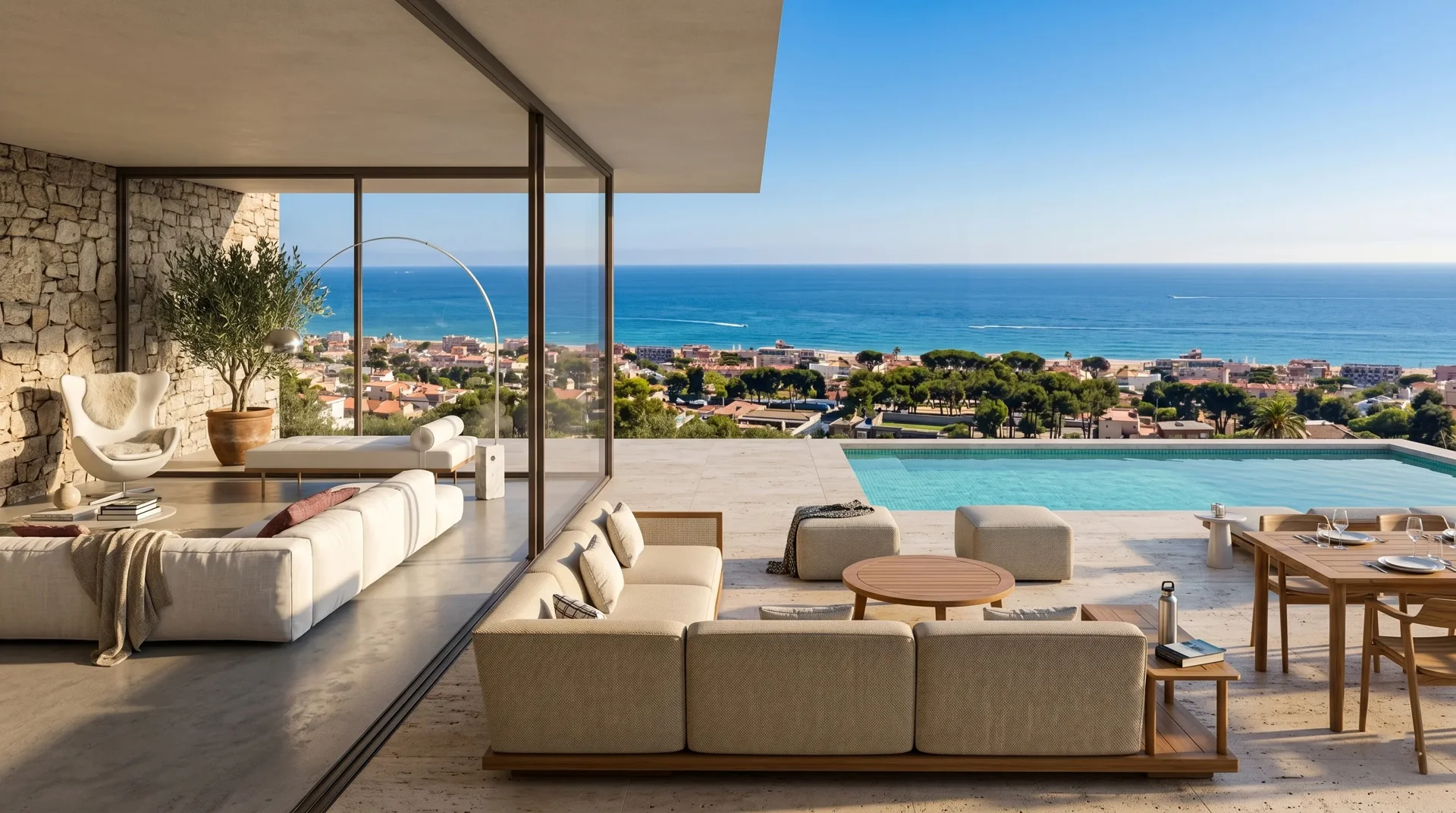
Contemporary architecture views the exterior as a natural extension of a home’s interior. Large windows, sliding doors, covered porches, and terraces allow the landscape to become an active part of the architectural design.
In Mediterranean settings such as Sitges, Castelldefels, and Gavà Mar, this relationship between interior and exterior is particularly important. The climate, light, and views shape the design, resulting in homes that open up to their surroundings and make the most of their natural qualities.
This approach not only improves the quality of the space but also enhances the architectural and emotional value of the home.
Honest materials and constructive consistency
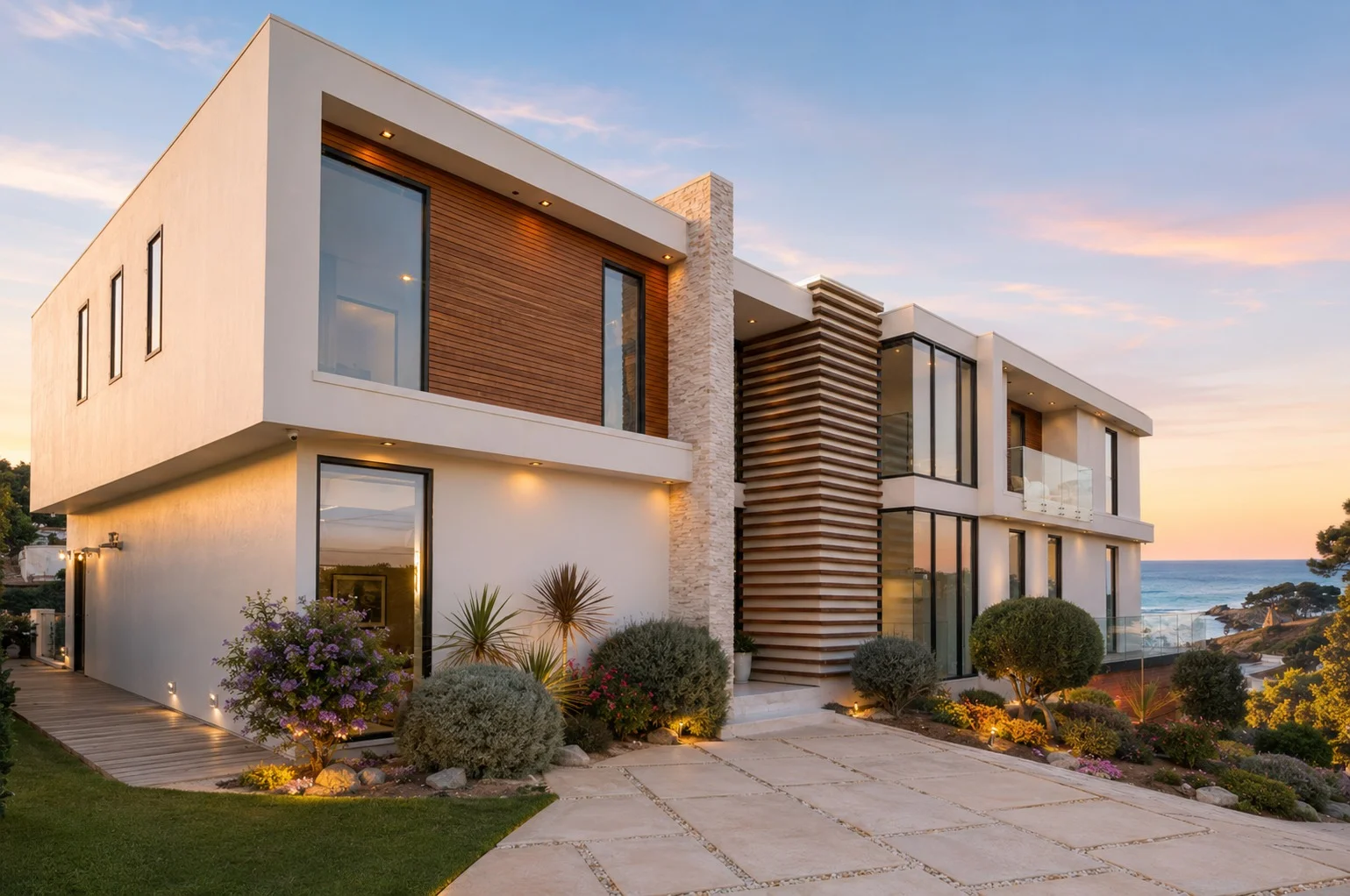
The choice of materials in contemporary architecture is guided by criteria of honesty, durability, and structural coherence. Exposed concrete, natural stone, wood, steel, and glass are used in a balanced way, revealing their true nature without unnecessary artifice.
Beyond aesthetics, the proper use of materials directly influences a home’s comfort, maintenance, and longevity. A well-built structure, constructed with materials used correctly, ages better and retains its value over time.
In high-end residential projects, construction details and the quality of workmanship are just as important as the initial concept.
Natural Light and Orientation Control
Light is one of the primary elements of contemporary architecture. The design of the home takes into account orientation, sunlight exposure, and views from the very beginning of the project.
Proper layout of the lot allows for the use of natural light throughout the day, reduces energy consumption, and enhances the sense of well-being in interior spaces. At the same time, sun-shading systems are being studied to ensure thermal comfort without sacrificing natural light.
This balance between openness and control is one of the keys to good contemporary architectural design.
Contemporary Architecture and Project Customization
Unlike standardized solutions, contemporary architecture emphasizes custom design. Each project is conceived as a unique response to a set of factors: the client, the site, regulations, the budget, and the surroundings.
This approach makes it possible to create homes that not only stand out for their appearance but also function optimally in everyday life. Customization is not limited to finishes; it also extends to spatial organization, proportions, circulation, and the relationship between rooms.
A specialized architecture firm guides the client through this entire process, helping them make informed decisions from the very beginning.
Integration with the surroundings and the urban context
Contemporary architecture, when properly understood, does not seek to stand out for its own sake, but rather to blend respectfully into its surroundings. This is especially important in established residential areas or in areas with a strong sense of place.
The volume, scale, materials, and layout on the lot are carefully considered so that the home interacts with its surroundings, adding value to both the project and the environment in which it is situated.
This sensitivity is key in residential projects on the coast or in municipalities with specific zoning regulations.
Contemporary Architecture as a Long-Term Investment
In addition to its aesthetic and functional value, contemporary architecture represents a long-term investment. A well-designed home remains relevant over time, adapts better to changes in use, and retains greater value in the real estate market.
The quality of the architectural design directly affects a home’s energy efficiency, comfort, and future maintenance. For this reason, working with an experienced architecture firm is a strategic decision—not just an aesthetic one.
The Role of the Architect in Contemporary Residential Projects
The architect serves as a key figure who coordinates design, engineering, and regulations. In contemporary housing projects, their role goes far beyond drawing up plans: they analyze the context, interpret the client’s needs, and ensure the project’s feasibility at every stage.
A comprehensive approach makes it possible to anticipate problems, optimize resources, and ensure that the final result is faithful to the original design.
Conclusion
Contemporary architecture applied to residential homes is the result of a delicate balance between design, functionality, and context. Open spaces, natural light, the relationship between interior and exterior, and authentic materials define an approach to design that is built to last.
Committing to this architectural approach means creating homes that are cohesive, personalized, and tailored to today’s lifestyle. When design is approached from a comprehensive and expert perspective, architecture ceases to be merely an aesthetic matter and becomes a true life experience.